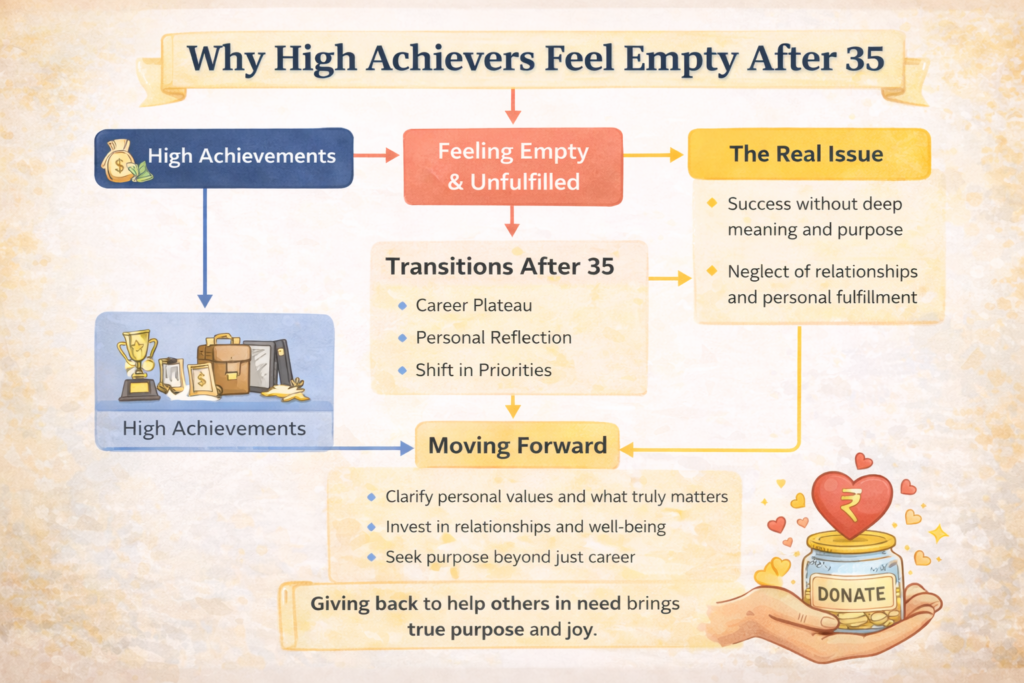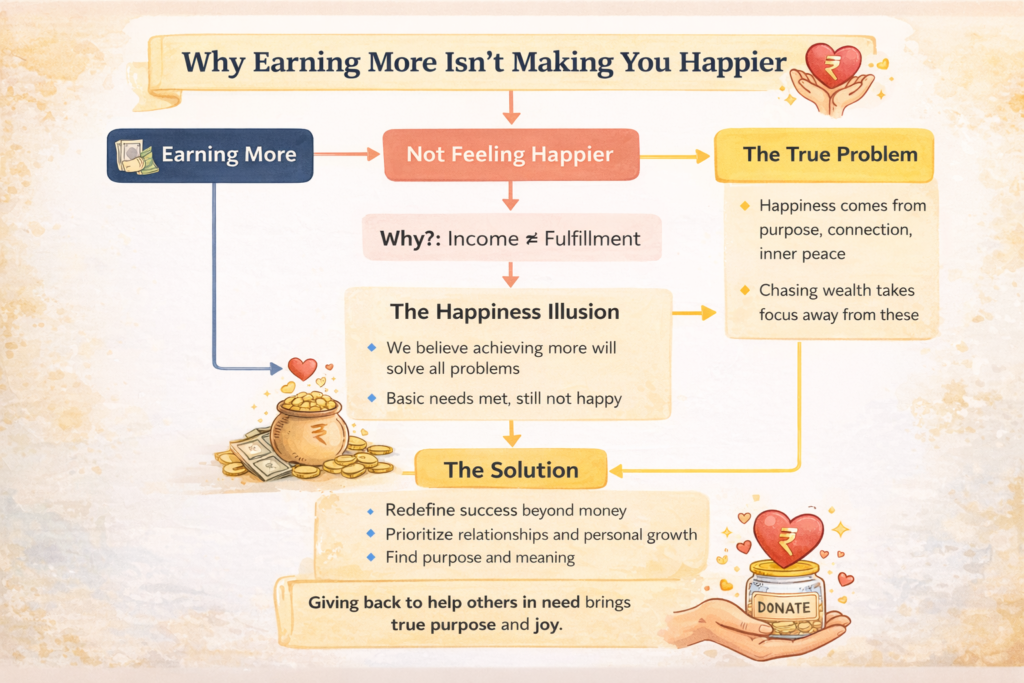
There is a feeling many people don’t talk about.
It doesn’t shout.
It doesn’t make a scene.
It shows up quietly.
Maybe after buying something expensive.
After upgrading your vacation.
After a fancy dinner.
After clicking “Buy Now” on something you didn’t really need.
It’s not regret.
It’s not money stress.
It’s something softer.
A small voice inside that asks:
“Could this money have done something more meaningful?”
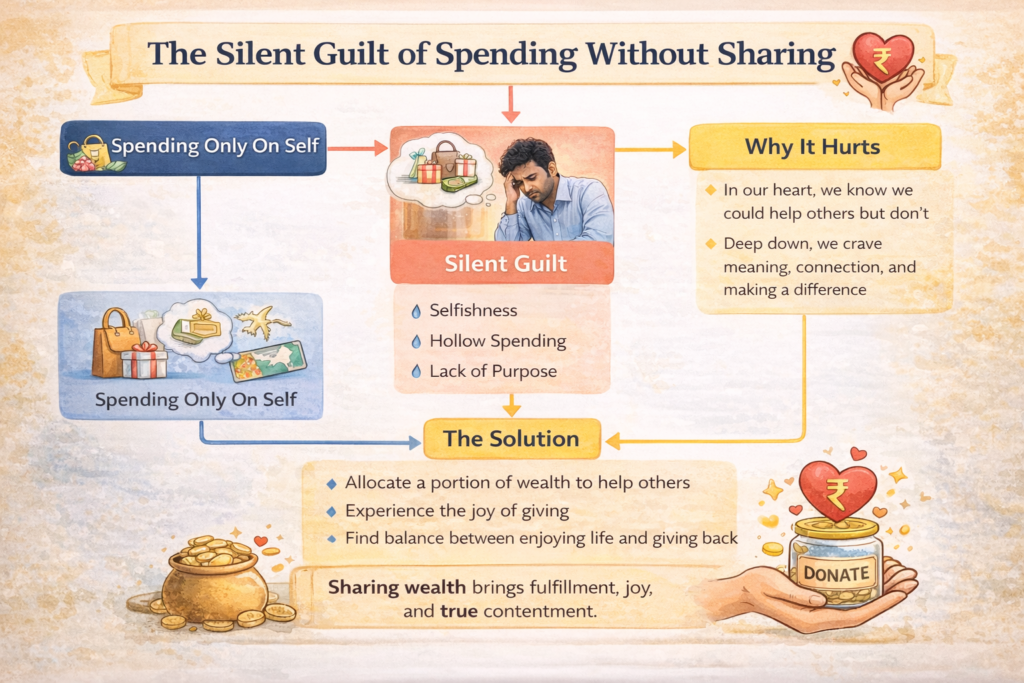
The Unspoken Inner Conflict
In today’s world, spending is normal. It is even celebrated.
We reward ourselves.
We upgrade our lifestyles.
We work hard — and we feel we deserve comfort.
And there is nothing wrong with that.
But somewhere inside, especially when we are aware of inequality, we carry a subtle discomfort.
We know that while we upgrade our conveniences, someone else is struggling for basics.
We know that while we debate brands, someone else debates whether education will continue.
This awareness creates a silent moral tension.
Not guilt from society.
But conscience from within.
Why This Feeling Exists
Human beings are wired for empathy.
Even if we live comfortably, we are aware — consciously or subconsciously — that not everyone does.
When our spending grows but our sharing does not, a quiet imbalance forms.
We don’t always articulate it.
But we feel it.
It shows up as:
- A fleeting discomfort after indulgence
- A sense that something is missing
- A thought that says, “There must be more to this”
This is not about shame.
It is about alignment.
The Difference Between Spending and Meaning
Spending gives pleasure.
Sharing gives purpose.
Pleasure is immediate and temporary.
Purpose is steady and enduring.
That expensive purchase may excite you for a few days.
But knowing that someone’s education continued because of you — that stays with you longer.
One satisfies desire.
The other satisfies identity.
The Psychology of Contribution
Studies in behavioral science consistently show that people who give — even in small ways — experience:
- Higher emotional well-being
- Greater life satisfaction
- Stronger sense of meaning
- Lower long-term regret
Why?
Because giving connects us to our values.
It reduces the internal conflict between comfort and conscience.
It allows us to enjoy what we have — without the weight of imbalance.
It’s Not About Giving Everything
The solution is not extreme sacrifice.
It is not about denying yourself comfort or success.
It is about proportion.
When prosperity grows, contribution should grow too.
When lifestyle expands, responsibility expands.
Sharing does not reduce your life.
It enriches it.
Education: The Most Meaningful Form of Sharing
Among many ways to contribute, education holds unique power.
When a girl continues her education:
- She gains confidence.
- She gains independence.
- She gains choices.
- She breaks generational limitations.
And the ripple effect extends beyond her — into her family and community.
Supporting education is not charity.
It is empowerment.
It is partnership in someone’s future.
Turning Guilt Into Growth
The silent guilt many feel is not something to suppress.
It is a signal.
It tells us that we want our lives to stand for something more.
Instead of ignoring that feeling, we can respond to it with intention.
A small, consistent act of sharing can transform discomfort into dignity.
It allows us to say:
“I enjoy my success — and I use it meaningfully.”
That balance removes guilt.
And replaces it with quiet pride.
Living in Alignment
There is a deeper peace that comes when our spending reflects our values.
When our lifestyle does not contradict our conscience.
When we know that somewhere, because of our decision, a child stayed in school.
A future continued.
A dream did not stop.
That kind of knowledge softens the mind.
It makes prosperity feel cleaner.
More complete.
A Different Definition of Wealth
Perhaps true wealth is not measured only by what we accumulate.
Perhaps it is measured by what we enable.
Comfort without contribution can feel hollow.
But comfort with compassion feels whole.
You do not have to stop spending.
You do not have to stop growing.
You simply have to let your growth uplift someone else too.
And when you do — the silent guilt disappears.
In its place comes something stronger:
Purpose.